
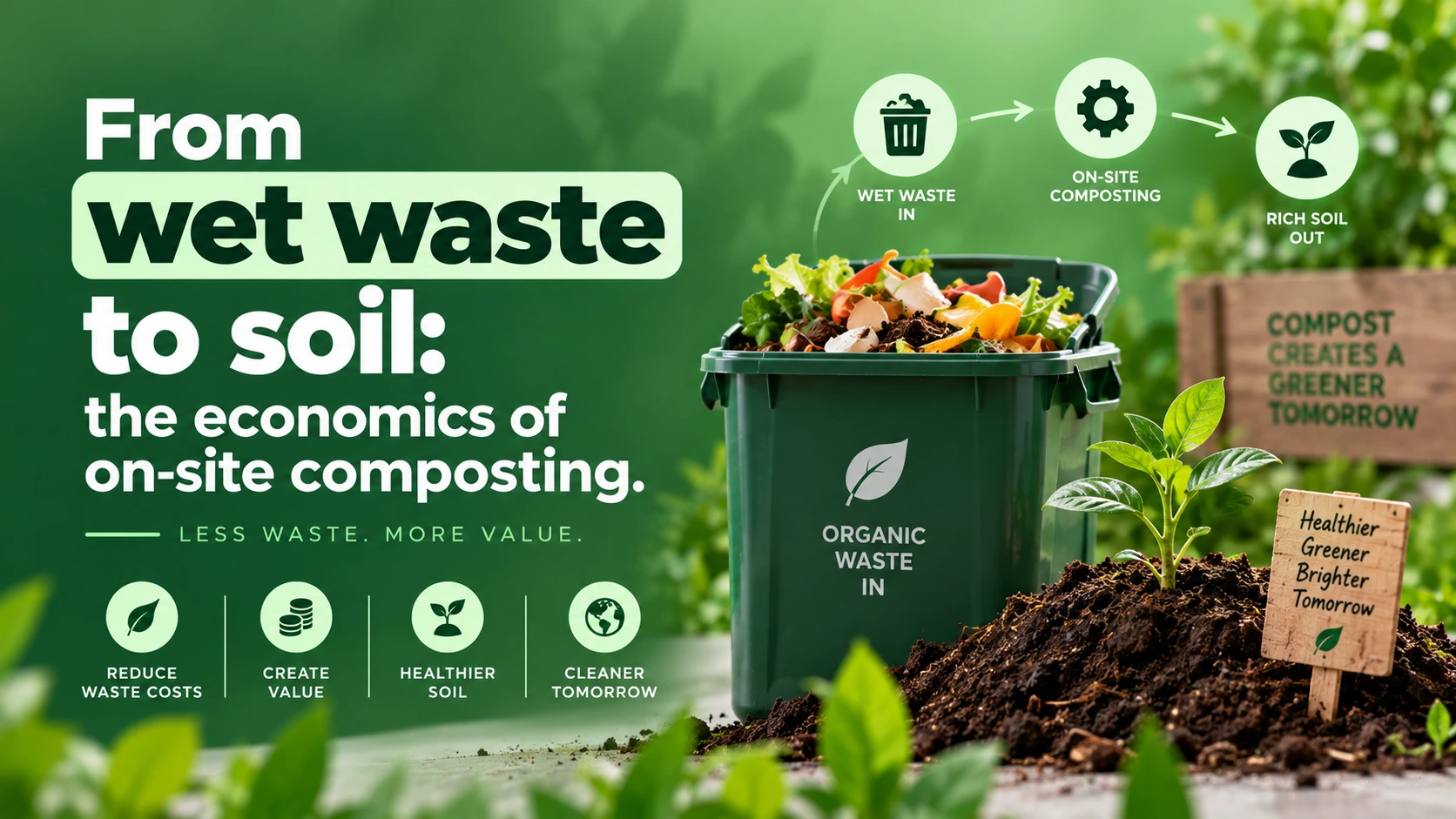
Organic wet waste accounts for approximately 50% to 60% of the total municipal solid waste generated across Indian commercial complexes, hotel properties, and corporate cafeterias. When discarded into municipal landfills, decomposing food waste creates anaerobic conditions that generate potent methane gas (CH4)—a greenhouse gas with a global warming potential 28 times greater than carbon dioxide over a 100-year timescale.
1. Technology Comparison: In-Vessel Composting vs. Bio-Methanation
Modern organic valorization has advanced far beyond traditional foul-smelling open compost pits. Enterprises now have access to engineered decentralized solutions:
- In-Vessel Aerobic Bio-Composters (IVC): Fully enclosed, automated tumblers utilizing thermophilic microbial inoculants, internal heating elements, and forced aeration to convert shredded food waste into mature, odor-free organic compost within 14 to 18 days.
- Micro-Scale Anaerobic Digestion: Generating pressurized biogas suitable for commercial kitchen stovetop burners while producing liquid bio-fertilizer for landscape maintenance.
2. The Financial Equation: Tipping Fees vs. CapEx Amortization
A commercial campus generating 500 kilograms of food waste daily incurs substantial recurring municipal disposal and hauling fees. By investing in an on-site in-vessel composter, the facility completely eliminates these transportation surcharges, while producing 75 to 100 kilograms of organic compost daily that offsets costly commercial soil conditioners for campus horticulture.